
In 1937, a pharmaceutical product sold in the United States caused one of the deadliest drug-related poisoning incidents in modern history.
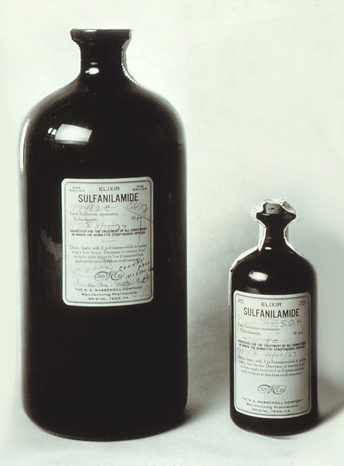
The product was called Elixir Sulfanilamide.
At the time, sulfanilamide powder was widely used to treat bacterial infections. To create a liquid syrup formulation, the manufacturer used diethylene glycol as a solvent — a toxic chemical now commonly recognized as an ingredient in automotive antifreeze.
At the time, there were no clear regulations requiring premarket safety testing for pharmaceuticals. The manufacturer evaluated only the product’s taste, appearance, and fragrance before releasing it to the market. The result was catastrophic: more than 100 people across the United States died after taking the drug, including many children. The incident shocked the nation and exposed critical gaps in pharmaceutical oversight.
The Elixir Sulfanilamide tragedy ultimately reshaped the history of drug regulation in the United States. In response, the U.S. government enacted the 1938 Federal Food, Drug, and Cosmetic Act, requiring pharmaceutical companies to submit safety data before marketing new drugs. The law is widely regarded as one of the foundations of the modern drug regulatory system.
From that point forward, the pharmaceutical industry evolved around a core principle: drugs must be proven safe before they are administered to humans. And for decades, animal testing became the most practical and widely accepted method for evaluating drug safety at the level of a living organism. It established itself as the global standard in preclinical drug development.
However, over time, the limitations of animal testing became increasingly difficult to ignore. Due to biological differences between humans and animals, many studies failed to accurately predict clinical outcomes in humans. Concerns surrounding cost, development time, and animal ethics also continued to grow. Together, these challenges fueled the demand for a new evaluation framework.
The FDA Modernization Act 2.0 of 2022 symbolized this shift. The U.S. FDA removed the longstanding requirement that animal testing be mandatory in the drug approval process, formally opening the door to alternative testing approaches. The move was seen not simply as an effort to reduce animal testing, but as a signal of a broader transformation in the paradigm of drug development.
At the center of this transition are organoids and NAMs (New Approach Methodologies). Human cell–derived organoids, organ-on-a-chip technologies, and AI-based predictive models are emerging as next-generation approaches capable of complementing — and in some cases replacing — conventional animal testing.
Nearly a century after animal testing became the cornerstone of preclinical research, the standard for drug development is once again approaching a major turning point.