
Hyukjin Kwon
Reporter, The Yakup
hjkwon@yakup.com
Organoid technology is emerging as a next-generation research tool that most closely replicates human physiology. New Approach Methodologies (NAMs) and animal-free testing are challenging the long-standing paradigm of animal-dependent research, while simultaneously demanding both scientific reliability and ethical responsibility.
As human-centered, optimized R&D—and research that does not pit science against ethics—has become central to global industry and regulatory frameworks, a new path is now materializing before us. To capture this moment and the new research standards being shaped by Korea, Yakup Newspaper visited Thailand on site. (Editor’s note)
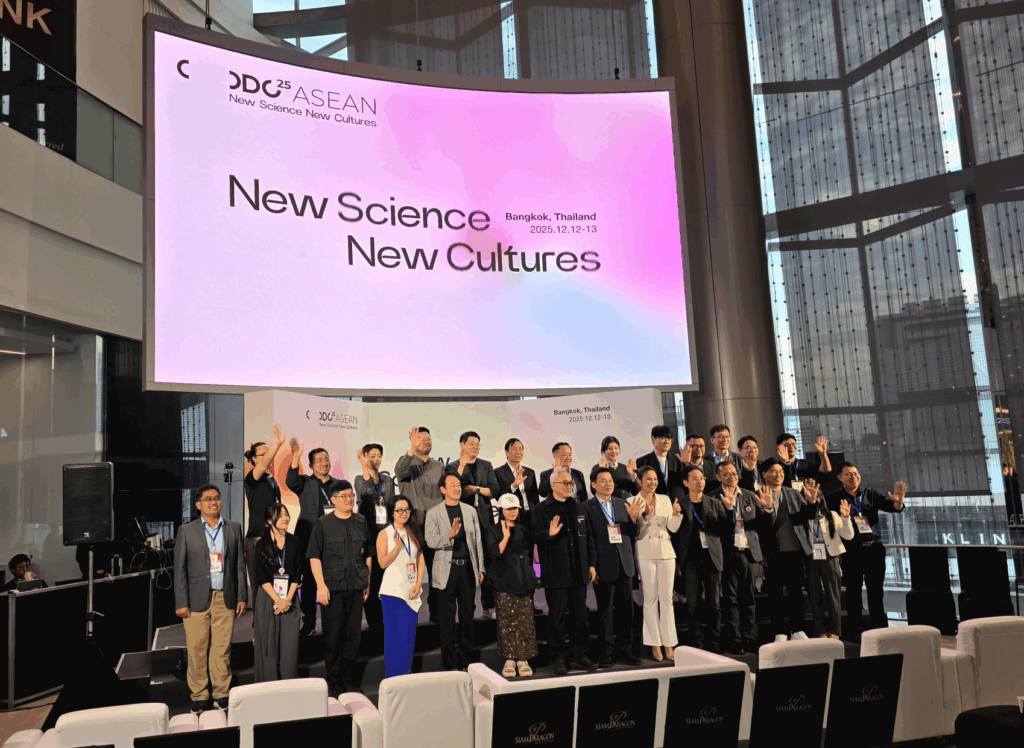
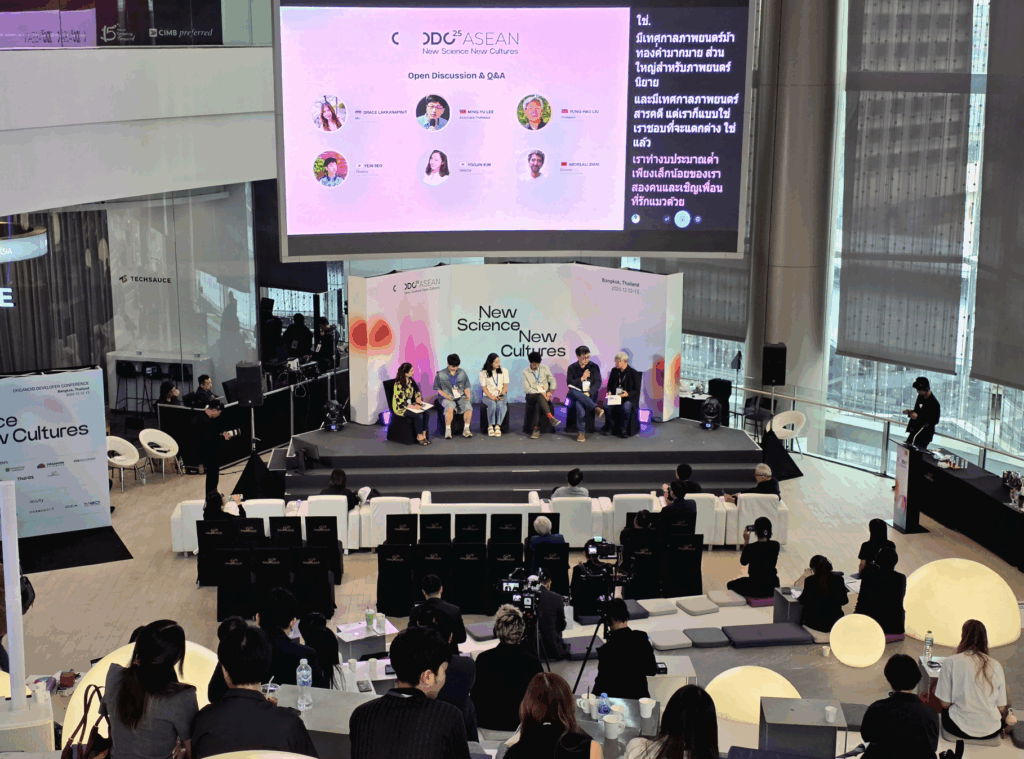
The Organoid Developer Conference (ODC) has moved its stage to ASEAN. Held in Bangkok, Thailand, on the 12th and 13th, ODC25 ASEAN went beyond introducing innovative technologies such as organoids and Advanced Therapy Medicinal Products (ATMPs). It became a forum that fundamentally questioned how—and in what environment—science should engage with society.
This first-ever expansion of the global organoid conference into ASEAN brought together leaders from academia, industry, research institutes, hospitals, and government across Korea, Thailand, and the broader ASEAN biohealth ecosystem to discuss new standards in regenerative medicine and non-animal alternative research.
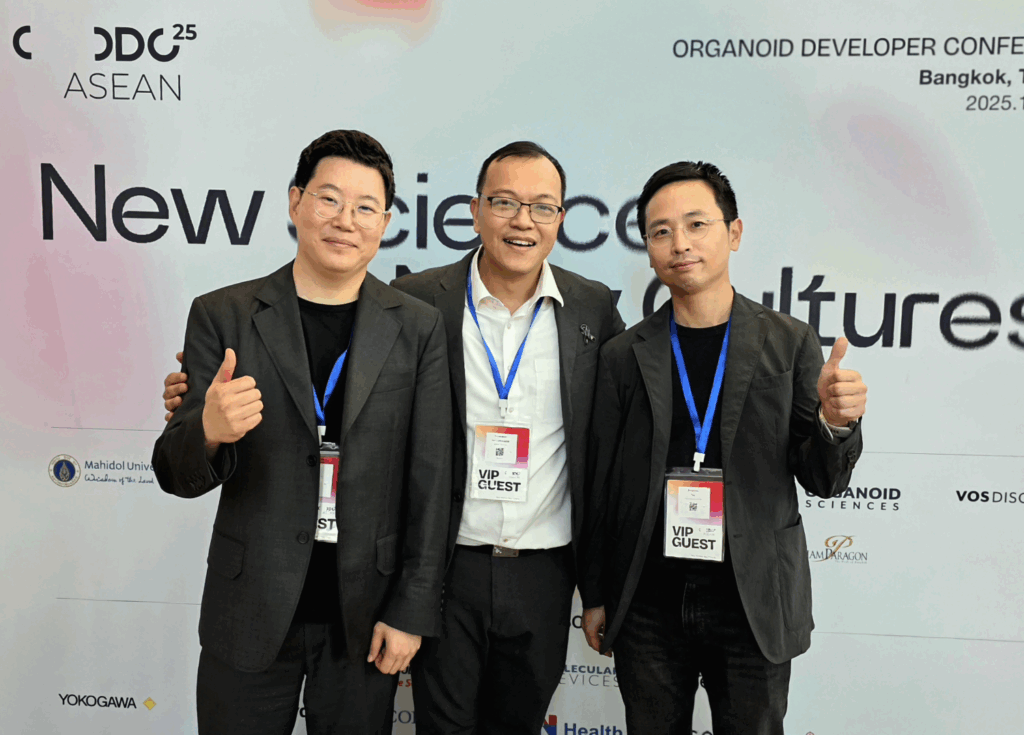
Jongman Yoo, CEO of Organoid Science, and Kyung Jin Lee, CTO, emphasized that “science can no longer remain confined to laboratories alone,” adding that “we have reached a stage where culture, policy, and social acceptance must be considered together.”
Through ODC in a new region and cultural context—ASEAN—Yakup Newspaper explores the direction in which the global bio ecosystem is heading.
What does the core message of ODC25 ASEAN, “New Science, New Cultures,” mean?
Jongman Yoo, CEO:
At Organoid Science, we believe that science should no longer remain solely within laboratories. Science must become a cultural asset that embraces art, ethics, policy, and social acceptance.
“New Science, New Cultures” represents our commitment to innovating the global bio ecosystem by combining cutting-edge bio technologies—such as organoids and ATMPs (New Science)—with new regional and cultural environments, namely ASEAN (New Cultures).
When advanced bio technologies are integrated into Asia’s dynamic cultural and policy landscapes, technology transcends data and papers to become a force that moves people and society. ODC25 ASEAN aims to create new values at precisely this intersection, contributing to improved human health and a sustainable future.
Why do you emphasize ODC as a “cultural movement” rather than an academic conference?
Jongman Yoo, CEO:
ODC operates along three main pillars: Bio Science, Arts & Culture, and the Animal Free Initiative. In particular, we use media such as art, design, sound, and games to present advanced bio technologies in a more intuitive way.
This allows science to move beyond academic circles and become a topic that society as a whole can discuss and reflect upon. Through this process, science becomes not just knowledge, but culture itself. That is why ODC is better described as a cultural movement—one that dismantles the boundaries between science and society.
Why was ASEAN—particularly Bangkok, Thailand—chosen as the host location for ODC25?
Kyung Jin Lee, CTO:
ASEAN has a population of approximately 680 million and rapidly growing healthcare demand. It is frequently cited as a key hub for the next generation of the global bio market. Bangkok, in particular, stands out as a geographic and cultural center of Southeast Asia, with excellent accessibility and strong governmental commitment to developing medical tourism and the biohealth industry.
While existing ecosystems in Korea, Europe, and the United States have focused on technological leadership and early regulatory frameworks, ASEAN takes a somewhat different perspective. Harmonizing regulations across multiple countries and building local clinical data are critical priorities.
The region is focused on developing a regenerative medicine ecosystem that reflects Asia-specific disease patterns and ethnic characteristics, and on rapidly translating these efforts into real-world industrial applications.
Organoids, ATMPs, NAMs, and MPS are frequently mentioned. Which areas are being commercialized most rapidly?
Kyung Jin Lee, CTO:
The fastest-moving area of commercialization is organoid-based platforms for drug toxicity and efficacy testing. These platforms significantly improve efficiency in the early non-clinical stages of drug development and increase the likelihood of clinical success by providing data that closely resembles human biology.
With global regulatory agencies rapidly expanding the adoption of NAMs, this area is no longer optional—it has become an essential direction for the industry.
How are NAMs and organoid-based testing methods changing the global regulatory environment?
Kyung Jin Lee, CTO:
NAMs and organoid-based platforms are no longer viewed merely as alternative animal testing methods. They are increasingly recognized as drivers of fundamental change in regulatory frameworks themselves.
In the United States, the FDA Modernization Act 2.0 of 2022 relaxed mandatory animal testing requirements in drug development. Since then, the FDA has released roadmaps and guidelines expanding the use of NAMs, opening the door for human-derived data—such as organoids—to be discussed in actual regulatory review processes.
The regulatory standard is shifting from animal-centered models to human relevance.
In line with this shift, ODC provides a forum for discussing cross-border regulatory harmonization and for establishing standards for quality control and commercialization of organoids. As technology advances, regulation and standardization must progress in parallel—this is the core awareness behind ODC.
What are the concrete goals of collaboration between the K-Organoid Consortium and ASEAN institutions?
Jongman Yoo, CEO:
The primary goal is to build a unified regenerative medicine ecosystem centered in Asia and to accelerate global commercialization based on that foundation. This goes beyond simple technical exchange; it is about creating structures that can be applied in real clinical settings.
From a technology and talent perspective, we aim to combine Korea’s leading organoid technologies—often referred to as K-Organoids—with ASEAN’s rich clinical environments and infrastructure. Developing organoid models for diseases prevalent in Asia, such as infectious and genetic disorders, and expanding them into broadly applicable drug development platforms is also a key objective.
Regulation and standardization are equally important. We plan to establish Asia-wide guidelines covering organoid quality control, clinical application, and commercialization to reduce development time and costs.
Does science communication using art, design, sound, and games actually work?
Kyung Jin Lee, CTO:
Yes, it does. These approaches enhance social acceptance of advanced technologies and enable early discussion of ethical issues—both of which are crucial for researchers and regulators.
For complex and ethically sensitive technologies like organoids, technical explanations alone are insufficient. Building social consensus is key.
Non-traditional media such as art, design, and video communicate complex concepts in more intuitive and emotional ways. Researchers gain perspective on the societal impact of their work, while regulators gain insight into the social contexts in which future technologies will operate.
In ODC’s Speculative Design sessions, future scenarios involving organoid technology were visualized, prompting regulators to proactively consider ethical issues and regulatory frameworks before clinical implementation.
Additionally, the Animal Free Initiative Tech Film Festival has effectively communicated the ethical value of animal-free testing to the public, contributing to broader social consensus and policy support.
What is the “ASEAN Biohealth Alliance” discussed during the VIP Networking Day?
Jongman Yoo, CEO:
The ASEAN Biohealth Alliance is a strategic collaboration concept designed to enable ASEAN countries to move together in regenerative medicine and advanced bio technologies. It aims to go beyond general exchanges and establish shared economic and regulatory objectives.
Discussions include joint investment in shared research infrastructure—such as organoid model libraries for specific diseases—and collaborative R&D initiatives.
At the same time, we are exploring the creation of a strategic investment fund that connects governments, leading companies, and venture capital firms to support ASEAN bio startups.
ODC has grown into a platform involving over 1,000 institutions worldwide. How will it expand further?
Kyung Jin Lee, CTO:
ODC will continue to grow beyond an academic event into a platform that drives global biohealth innovation and reshapes perceptions of technology.
Having expanded from Korea to ASEAN, we expect collaboration to extend further into key Asian countries such as Singapore, Japan, and India, as well as emerging bio hubs in the Middle East.
The scope will also broaden beyond organoid technology to include spatial biology and personalized regenerative medicine, leading the convergence of advanced bio technologies.
At the same time, ODC will strengthen its role as a permanent platform that brings together global regulators and private investors, enabling continuous commercialization and funding connections.
What is the greatest opportunity ODC offers to Korean bio researchers and companies?
Jongman Yoo, CEO:
The greatest opportunity lies in global expansion and early regulatory positioning. ODC25 ASEAN, in particular, provides Korean companies with direct access to key policymakers, major hospitals, universities, and local partners across ASEAN, enabling high-level networking and tangible joint business opportunities.
ASEAN is a region that readily embraces Korea’s advanced bio technologies, offering ample room to move together from early stages.
ODC will continue to serve as a place where diverse roles are connected, ideas are shared, and a new era is collectively envisioned and built.