
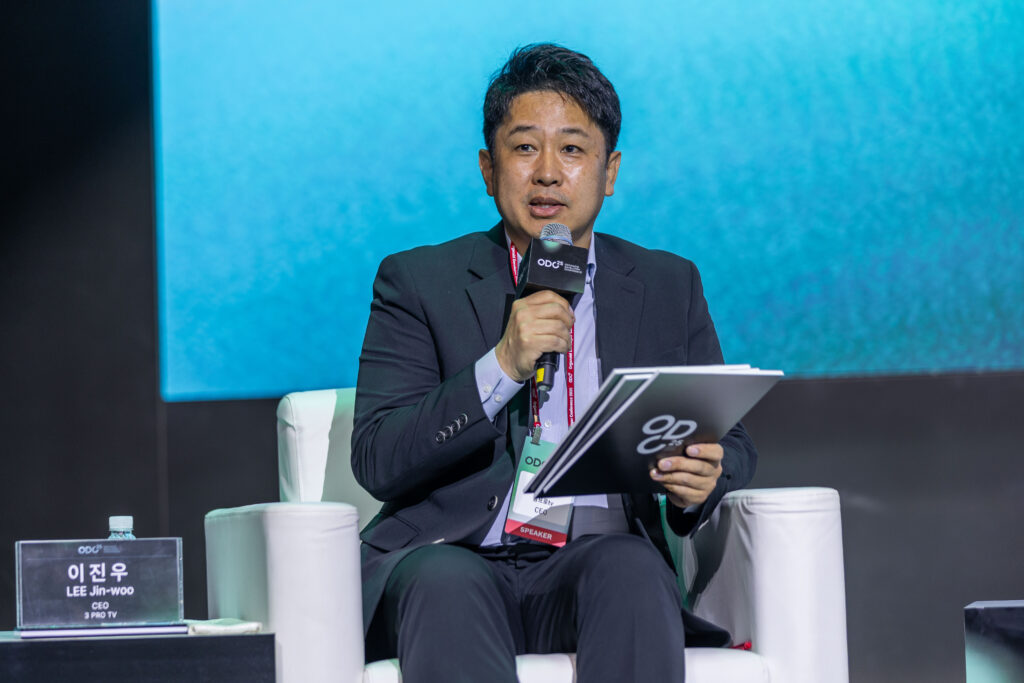
At ODC25 Seoul, the panel talk The Age of Artificial Organs, Organoids explored the medical innovations, social impact, and ethical boundaries of organoid technology. Professor Sun-Woong from Korea University, Jongman Yoo, CEO of Organoid Science, Dr. Miyoung Son from the Korea Research Institute of Bioscience & Biotechnology, and Eunhye Lee, producer at Withstand, shared their insights and visions.
Why Organoids
The rise of organoid research is clear. By cultivating stem cells in three dimensions to reproduce organ structures, researchers are breaking through the limits of traditional therapies. As human life expectancy increases, the demand for healthier lives grows, driving both scientific and social momentum. Organoid Science has already conducted clinical trials using intestinal organoids, applied to patients with conditions such as Behçet’s disease and Crohn’s disease, where existing treatments had limited effect. Some patients not only showed symptom improvement but reached near-complete recovery. These are not just possibilities but tangible results that are already transforming lives.
Applications and Limitations
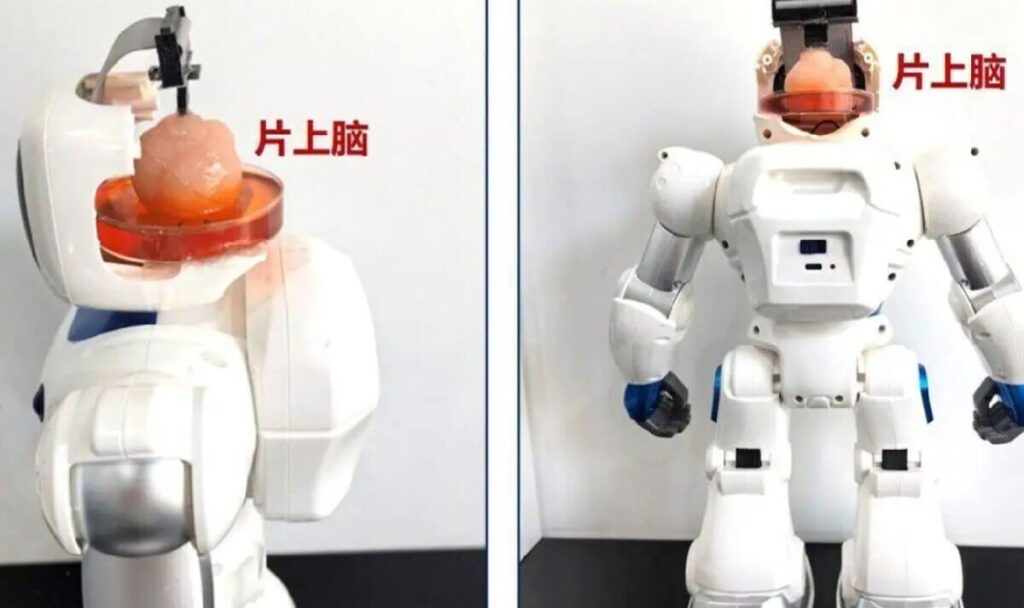
The applications extend beyond regenerative therapies to drug development and toxicity testing. Traditional animal models often fail due to species differences, but organoids, derived from human cells, offer more accurate models while reducing costs and time. Yet not all organs can be replicated with the same ease. Organs like the intestine, where stem cells can be relatively easily harvested and cultured, are progressing rapidly toward clinical use. In contrast, the brain and heart remain far more complex. Recent reports of brain organoids responding to external stimuli—appearing to “learn”—highlight both the potential and the ethical concerns of this technology.
From Cinematic Imagination to Ethical Questions

Cinema has long envisioned cloned humans and artificial organs, reflecting humanity’s desires and fears. Today, those imaginings are edging closer to reality. Rather than pursuing the extreme path of full human cloning, researchers are focusing on partial organ growth, gene editing, and even mechanical substitutes. The central question is whether technology can fulfill human desires while respecting ethical boundaries. Human civilization itself has advanced by meeting needs and desires through technological progress. Organoids continue in this trajectory but carry new meaning: they may serve human needs without crossing into full human replication.
Regulation and Social Consensus
No matter how promising, technology cannot enter clinical practice without regulatory and institutional frameworks. Since regulatory changes are already underway internationally, experts emphasized the urgency of proactive discussion within Korea. They cautioned against overly rosy expectations and stressed the importance of steady investment and long-term commitment to ensure safe, broad benefits.
A Question for the Future
The ultimate question is simple. Organoids hold the promise of fulfilling human needs, yet the pace of technological progress risks outstripping ethical and social consensus. If a technology that can offer real hope to patients with Crohn’s or Behçet’s disease also carries the potential for human cloning controversies, what choices will we make? As organoids shape the future before us, how far are we willing to go?